3D Lighthouse Lantern Laser Cut Files: A Practical Guide for Makers and Designers
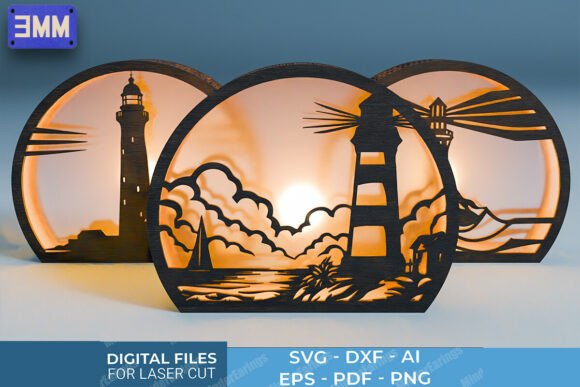
For hobbyists, professional makers, and interior design enthusiasts, the transition from flat vector art to tangible, three-dimensional decor often hinges on finding the right digital assets. 3D Lighthouse Lantern Laser Cut Files represent a specific category of digital downloads designed to bridge this gap efficiently. These files are not merely illustrations; they are engineered blueprints containing all necessary components to construct three distinct lighthouse lanterns using laser cutting technology. Each design captures a unique coastal narrative—a sunrise scene, a rocky shore composition, and a classic beacon—optimized for assembly into functional lighting fixtures.
The appeal of these files lies in their specificity and readiness for production. Unlike generic vector art that requires significant modification to become structural, these resources come pre-configured with clear cut and engrave lines. They are specifically calibrated for 3mm material thickness, a standard dimension that balances structural integrity with aesthetic delicacy in wood or acrylic projects. This level of preparation reduces the technical barrier for users who may have access to machinery but lack the time or expertise to engineer complex joinery from scratch.
Understanding the Distinctive Features of 3D Lantern Designs
What sets 3D Lighthouse Lantern Laser Cut Files apart from standard 2D graphics is the inherent geometry required for assembly. A typical silhouette file provides a single layer of data suitable for cutting a flat shape. In contrast, 3D lantern files decompose an object into multiple panels, tabs, and slots that interlock to form a volume. The three designs included in this collection—sunrise, rocky shore, and classic beam—demonstrate how thematic elements can be integrated into structural components without compromising the build process.
The "sunrise" design likely utilizes gradient shading or layered cuts to simulate light diffusion, while the "rocky shore" variant may incorporate textured engraving to mimic natural stone. The "classic lighthouse" offers a more traditional geometric approach, focusing on the iconic spiral or tiered structure. By providing these variations, the resource allows creators to select a style that matches a specific interior palette or gifting occasion. The inclusion of optimized line types ensures that the laser cutter distinguishes between where to slice through the material and where to etch surface details, streamlining the workflow significantly.
Comparing File Formats and Their Practical Implications
A critical aspect of evaluating any digital download for manufacturing is the versatility of the provided formats. High-quality 3D Lighthouse Lantern Laser Cut Files typically include a suite of formats to accommodate different software ecosystems and hardware requirements. Understanding the utility of each format helps users determine if the product fits their existing workflow.
- SVG (Scalable Vector Graphics): This is the industry standard for most consumer and prosumer laser cutters. SVG files maintain crisp edges at any scale, making them ideal for resizing the lantern dimensions without losing detail. If your primary machine relies on LightBurn or similar interface software, this is your go-to format.
- DXF (Drawing Exchange Format): Widely used in CAD environments and industrial settings, DXF files offer robust compatibility with older systems or specific engineering software. They are excellent for ensuring that coordinate data remains precise during the translation from design to cut path.
- AI (Adobe Illustrator): For users who wish to customize the design before cutting, AI files provide full editability. You can adjust the size of the windows, alter the intensity of the engrave patterns, or even swap out certain decorative elements to create a bespoke version of the lantern.
- EPS (Encapsulated PostScript): Similar to AI but more universal across different design platforms, EPS ensures that vector data remains intact regardless of the operating system or specific application used.
- PDF: While primarily for viewing, high-quality PDFs serve as essential documentation. They allow you to visualize the final layout, check fitment against your material sheet, and print instructions for manual assembly steps if needed.
- PNG: Though raster-based and unsuitable for cutting, high-resolution PNGs with transparent backgrounds are invaluable for creating mockups. They enable you to present the finished concept to clients or share progress on social media before committing to physical materials.
This multi-format approach contrasts sharply with limited offerings that provide only a single image type. Having access to editable vector formats like AI and DXF empowers the maker to adapt the design to non-standard material sizes or to integrate the lantern into a larger installation project.
Evaluating Material Compatibility and Structural Tradeoffs
The specification of 3mm material thickness is a deliberate design choice that influences both the aesthetics and the durability of the final product. When comparing 3D Lighthouse Lantern Laser Cut Files to designs intended for thicker stock (such as 6mm or 9mm), tradeoffs become apparent. Thicker materials generally yield sturdier structures capable of supporting heavier LED arrays or enduring rougher handling. However, they also require longer cut times, consume more power, and result in wider kerf lines that can affect the precision of tight joints.
Conversely, the 3mm specification strikes a balance ideal for delicate coastal scenes. It allows for finer details in the rocky textures or sunrise gradients to be preserved without burning through intricate areas. For a home studio or beach house setting where the lantern serves as ambient decor rather than a rugged outdoor fixture, 3mm plywood, birch veneer, or acrylic is often sufficient. The lighter weight also facilitates easier hanging or placement on fragile surfaces.
However, users must consider the limitations. If the intention is to create a large-scale architectural feature or a durable gift for a child, the 3mm design might feel too fragile. In such cases, the decision factors shift toward either sourcing files specifically engineered for thicker stock or modifying the current design to reinforce stress points. It is crucial to test the fitment on scrap material first, as the tolerance for tab-and-slot connections can vary slightly depending on the moisture content of the wood or the density of the acrylic.
Decision Factors: When to Choose Digital Downloads vs. Alternatives
Determining whether 3D Lighthouse Lantern Laser Cut Files are the right resource depends heavily on the user's goals, available tools, and desired level of customization.
Choose this option when:
- You own access to a laser cutter and seek to minimize design time. The pre-optimized cut lines save hours of CAD work.
- You need a variety of styles quickly. Having three distinct coastal themes in one package offers flexibility for different rooms or seasonal decorations.
- You value the ability to produce consistent, repeatable results. Digital files ensure that every unit produced matches the original specifications exactly.
- You are looking for cost-effective prototyping. Producing small batches of lanterns for gifts or local sales is economically viable with digital files compared to purchasing pre-made units.
Consider alternatives when:
- You do not have access to laser cutting equipment. Without the machinery, these files are useless unless you plan to outsource the cutting, which adds cost and logistical complexity.
- You require a highly customized shape that deviates significantly from the lighthouse motif. While AI files allow some editing, starting from a blank canvas might be more efficient for radically different concepts.
- Your target market demands industrial-grade durability. If the lanterns are intended for harsh outdoor environments, you may need designs specifically tested for weatherproofing and thicker, treated materials.
Practical Applications and Assembly Considerations
The ultimate value of these files is realized in the assembly phase. The designs are structured for ease of construction, featuring tabs and slots that snap together or glue with minimal effort. This accessibility makes them suitable for a wide range of users, from seasoned fabricators to beginners exploring nautical-themed decor. The tranquil aesthetic of the lighthouse, particularly when illuminated from within, creates a focal point that enhances spaces ranging from modern studios to rustic beach houses.
When executing the project, attention to material selection is key. Birch plywood offers a warm, organic look that complements the "rocky shore" and "sunrise" themes, while clear or frosted acrylic can amplify the "guiding light" effect of the classic design. The inclusion of high-resolution PNG mockups assists in visualizing how different materials will interact with the internal light source, reducing the risk of costly mistakes.
In conclusion, 3D Lighthouse Lantern Laser Cut Files offer a balanced solution for those seeking to merge digital design with physical craftsmanship. By providing versatile formats, optimized geometries for 3mm stock, and varied thematic options, they address common pain points in the laser cutting workflow. While they are not a substitute for custom engineering in every scenario, they represent a highly efficient resource for creating high-quality, nautical-inspired decor that resonates with lovers of the sea and design enthusiasts alike.