Valentines Day Card 3D SVG: Elevating Your Crafting Projects
Creating a handmade Valentine's Day card is a timeless tradition that conveys sincerity and effort in a way mass-produced greeting cards simply cannot match. However, many crafters find themselves stuck between the desire for a professional, three-dimensional look and the limitations of standard flat cutting files. This is where the Valentines Day Card 3D SVG format becomes an essential tool for modern makers. By utilizing layered vector designs specifically engineered to create depth, you can transform simple paper into intricate, pop-up masterpieces that capture attention and emotion.
Understanding the Power of 3D SVG Files
At its core, an SVG (Scalable Vector Graphics) file is a digital blueprint that allows your cutting machine to interpret shapes with perfect precision, regardless of size. A standard SVG might cut a single heart shape, but a Valentines Day Card 3D SVG takes this concept further by providing multiple layers within a single design. These layers are offset from one another to create shadows, depth, and dimension when assembled.
Unlike raster images such as JPEGs or PNGs, which lose quality when resized, these vector files remain crisp at any scale. The "3D" aspect refers not to the file itself being three-dimensional, but to the potential of the design to be constructed into a three-dimensional object. When you download a Valentines Day Card 3D SVG, you are receiving a complete set of instructions for your machine to cut the front face, the backing layers, and often the structural components needed to make the design stand up or pop out.
Common Challenges in Digital Paper Crafting
Many adults who enjoy crafting face specific hurdles when attempting to create high-end greeting cards. One of the most frequent issues is the lack of complexity in free online templates. While there are thousands of free designs available, they often result in flat, one-layer cuts that lack visual impact. Achieving a true shadow-box effect or a pop-up mechanism usually requires advanced design skills to layer elements manually, a process that can be time-consuming and frustrating for those without graphic design software expertise.
Another significant challenge is compatibility. Crafters often invest in specific machines like the Silhouette Cameo or Cricut Maker, only to find that their favorite designs do not import correctly. Files may come in incompatible formats, require tedious ungrouping, or fail to recognize the necessary offsets for 3D effects. Furthermore, the fear of wasting expensive cardstock on a failed cut job due to poor file quality is a real concern. Users need resources that are guaranteed to work seamlessly with their existing hardware to ensure a smooth creative flow.
How 3D SVG Files Solve Crafting Dilemmas
The introduction of a dedicated Valentines Day Card 3D SVG package directly addresses these pain points by offering a plug-and-play solution. These files are pre-organized and optimized for the two most popular cutting platforms: Silhouette Studio and Cricut Design Space. This means that once you download the file, you can open it immediately without needing to adjust settings, redraw lines, or guess at layer orders.
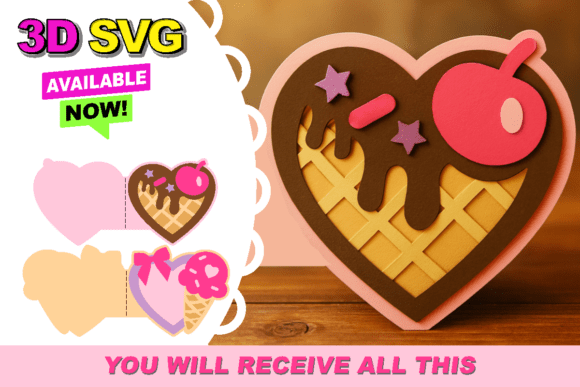
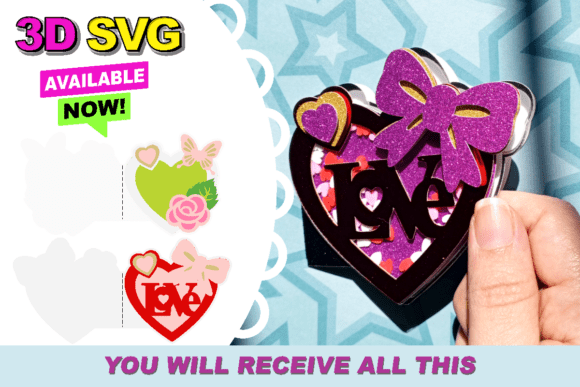
By using a specialized 3D file, you eliminate the trial-and-error phase of designing your own layers. The offsets are already calculated to provide the perfect amount of shadow and depth. For instance, if you are creating a layered heart design, the file will automatically separate the top heart from the slightly larger bottom hearts, ensuring that when you adhere them, the result looks professionally manufactured rather than homemade. This efficiency allows you to focus on the artistic assembly and personalization of the card rather than fighting with software glitches.
Practical Applications and Creative Outcomes
The versatility of a Valentines Day Card 3D SVG extends far beyond a simple greeting. These files open the door to various creative projects that can serve different needs. You might use them to create wedding invitations with a dimensional seal, anniversary cards with intricate floral pop-ups, or even decorative wall art for a romantic home setting. The ability to resize the file without losing quality means you can adapt the same design for a small pocket card or a large banner.
Consider the outcome of using these files for a scrapbook page. Instead of gluing down flat photos or stickers, you can cut out a 3D frame using the SVG layers, adding texture and interest to your memory keeping. For those who run small businesses selling handmade goods, these files provide a consistent product line that customers perceive as high-value. The neat, zipped folder organization ensures that you have all the necessary variations—perhaps different colorways or text options—ready to go, streamlining your production workflow.
Compatibility and Software Considerations
While the primary focus is on Silhouette and Cricut users, the nature of SVG files makes them accessible to a wider range of creators. If your creativity flows through a different type of machine, such as a Brother ScanNCut or a laser cutter, it is important to ascertain its compatibility with this distinct file format. Most modern cutting and engraving machines support SVG imports, though the specific workflow may vary.
For Silhouette Studio users, the Valentines Day Card 3D SVG typically opens as a multi-page document or a grouped set of layers that can be easily separated. In Cricut Design Space, the file uploads cleanly, allowing you to apply "Weld" or "Attach" functions as needed to maintain the integrity of the 3D structure. It is always recommended to perform a test cut on plain paper before committing to premium cardstock. This simple step ensures that your blade pressure and speed settings are correct for the thickness of the material you are using, preventing frayed edges or incomplete cuts.
Tailoring the Experience to Different User Levels
Different users will approach the topic of 3D crafting with varying levels of experience, and the flexibility of these files accommodates everyone. Beginners can stick to the default settings provided in the file, following basic assembly instructions to achieve a stunning result with minimal effort. They can focus on selecting the right colors of paper to enhance the shadow effect, learning how contrasting tones make the 3D illusion more pronounced.
Advanced crafters, on the other hand, can take the base Valentines Day Card 3D SVG and modify it extensively. You might add your own text, change the background patterns, or combine multiple 3D elements into a single, complex scene. The vector nature of the file allows for infinite customization. You could experiment with mixed media, incorporating ribbon, sequins, or fabric alongside the cut paper layers to create a tactile, multi-sensory experience for the recipient.
Maximizing Your Crafting Potential
To get the most out of your Valentines Day Card 3D SVG project, consider the materials you choose. Thicker cardstock generally holds the 3D structure better than thin paper, especially for pop-up mechanisms. Additionally, paying attention to the grain of the paper can affect how the layers bend and fold. When assembling, use adhesives that do not warp the paper, such as double-sided tape or foam adhesive pads, which are crucial for maintaining the separation between layers.
Ultimately, the goal is to create something meaningful that reflects your personal touch. Whether you are making a single card for a loved one or producing a batch for a local market, the ease of access provided by a well-organized, zipped folder of 3D SVG files removes the technical barriers to entry. By leveraging these tools, you ensure that your creativity is the only limit, allowing you to produce Valentine's Day cards that are not just sent, but truly remembered.